Thursday, April 7, 2022

Palladius: On Husbandry, c. 350

 Found this great section on medieval peasant farming practices, from the Internet Medieval Sourcebook.


Book I, C.5. Lands fat or lean, thick or rare, dry or moist, and not without defects, are good for divers seeds; but my advice is to choose the fat and moist. Its work is least and its fruit is best. And next the thick and rank is best; but eschew the thick and dry and let it alone.

C.24. Till all the field or all the field is lost; wheat sown thrice in too fat land will, wonderful to say, change into other grain....

C.27. To till a field one must have diligence and leave no part unsown; but plough it up altogether. A little well tilled will repay expenses well, so undertake as much as you can easily do.

C.33. But after it is burnt do not go near it for five years; and after that you will see that it, as richer land, will grow and thrive.

C 40. I am unwilling to make him who is a favorite foreman over the field; and why? For he will deem his work is well howsoever it may be.

C.65. And it is good for pipes to lead from it (the cistern) each to carry drinking water, the liquor of grace above, a thing celestial.

C.72. One should also take care about an oil-cellar; to warm it the pavement below should be perforated and raised. So that smoke cannot harm it, make a trench under the fire, and heat the well protected house from winter, keen and cold. Now I would like to write on the husbandry of stables.

C.73. Toward the south you set the stable and the stall for horses and neats and get the light from the north, and close it tight to keep out the winter cold. In summer take care to cool the house and in the cold weather make a fire near the beasts; it will help the oxen and make them fair if they keep near the fire.

C.108. Set the dunghill wet so it may rot and be odorless; also set it out of sight; the seed of thorn will decay and die in it. Assess dung is best to make a garden with; sheep's dung is next; and after that the goat's and neat's; also horses' and mares'; but swine's dung is the worst of all this lot.

C.114. One plants thorns; another sows seeds; but (for fences and garden walls) seeds of bramble and hound's thorn do well; and gather that as ripe as necessary.

C.145. The bee-yard should not be far away but aside, clean, secret, and protected from the wind, square, and so strong that no thief can enter it.

C.165. Make ready now each needed instrument; look to the little plough and the large one also; sharpen the edges and plough up where the land is moist; still more tools should be prepared as the mattock, axe, pickaxe, saws long and short, also crooked knives for vine and bough, and scythes and hooked sickles.

C.266. And crooked sharp-backed scythes; and bring forth also the little crooked knives to take away a branch in young plants, the hooks that cut the ferns, bills to dig up briars, rakes, crooks, adzes, pitchforks, and double-bitted axes for the thorns.

C.67. There must be marking irons for our beasts, and tools to geld, and clip, and shear; we also need leather coats to wear with hoods about our heads; and we must wear boots, leggings, mittens; all this is good for husbandmen and hunters; for they must walk in briars and in woods.

Book IV. C.25. Now sow hollyhocks and armorace or arborace which is wild radish; and now plant origan in its place; now (sow) leeks, beets, lettuce, capers, savory, colocasia, and cresses; let all now sow marigolds or radishes; and bless them; trust in God that all shall grow.

C.32. Asparagus is sown about the first of April in wet and fat land in small ridges made by a line, so that seeds which fall a half or three feet are left; and spread on it a sheet of dung and weed it well, and cast straw on it till spring; then it may be taken off

C.98. Now graft pears, sweet or sour apples, service trees, quince, plum, and mulberry trees. On March 24th this should be done. Pistachio is now grafted to grow in cold lands; and pine seed is sown.

Book V. C.1. Medicago should be sown in April in prepared beds; it is taught that, once sown, it will grow for ten years and be cut annually four or six times. It dungs lean lands and fattens up lean beasts and cures the sick ones. An acre a year will suffice for three horses.

Book VII. C.5. One ox's work with a little help from man will take up all the harvest in this wise: they make a square cart on two wheels and board it up in a certain way widening it toward the top so that toward the top it is broad. Its jaw in front which gathers up the wheat should not be high but even.

C.6. That instrument should be bent upwards and toothed so close that the spikes of grain will not pass them. And at the back fix two shafts as a dray has in front, and yoke to it a meek ox that will draw and stand and turn and make it go forward. And all the grain will fall into this cart

C.7. These teeth will force in the ears that are in front; the drover notices how low and high the grain is which is going in and leaves the chaff behind. Thus shall an ox in a few days gather up the whole harvest; this cart is to be used in plain field lands where chaff is of no use.

Book VIII. C.3. Small onions should now be sown in cold and wet places; also radishes and orage if you can water them, and basilicon; lettuce, mallows, beets, leeks should be watered now. Now sow turnip and rape in wet lands; they rarely thrive in rotten lands but in wet lands and fields.

Book X. C.23. Gith (cockle) is lastly also to be sown in this moon; cresses and dill in temperate lands or radishes in dry lands will grow quickly; parsnips and caerefolium may also be set out; at the first of October sow by hand lettuce, beets, and also coriander seeds; rape and turnip it is now indeed good to sow.

Book XI. C.38. The apple is planted in hot and dry land. At the first of November quince and service-berry are set in seed beds to multiply. And they do the same with the almond tree. Pine is to be sown now, and fruits to be kept for preserves, as has already been taught of each.

Book XII. C.3. For Columella affirms that a field which has been fallow has proved more profitable for wheat than the fields where the yield has been beans: sow six strikes to the acre of rich land; less is sufficient in poor land; but in firm land the bean will grow and it hates weak and lean soil.

C.45. This moon in dry places and cold regions the wild pear should be planted to be grafted; citron, olive, pomegranate, service, medlar, carob, mulberry, cherry, fig, almond, and walnut, as the craft has been taught before, are to be renewed in seed plots.


Source.

From: Palladius, On Husbandrie, trans. Barton Lodge, Early English Text Society, Vol. XXIV, No. 52, (London: N. Trubner, 1873-1879), reprinted in Roy C. Cave & Herbert H. Coulson, A Source Book for Medieval Economic History, (Milwaukee: The Bruce Publishing Co., 1936; reprint ed., New York: Biblo & Tannen, 1965), pp. 38-41.

Scanned by Jerome S. Arkenberg, Cal. State Fullerton. The text has been modernized by Prof. Arkenberg.

This text is part of the Internet Medieval Source Book. The Sourcebook is a collection of public domain and copy-permitted texts related to medieval and Byzantine history.

Unless otherwise indicated the specific electronic form of the document is copyright. Permission is granted for electronic copying, distribution in print form for educational purposes and personal use. If you do reduplicate the document, indicate the source. No permission is granted for commercial use.

© Paul Halsall, September 1998

halsall@murray.fordham.edu

Tuesday, March 29, 2022

Orcs are Larva

 If you are working and cut your finger and instead of healing that small cut goes sour and you lose that finger we say it was the work of orcu. Barrow blighters. They are the counter part the mockery of men. Where men relish the sunshine and fresh air they only know cold and damp and dark and cruelty. They live in tribes like our peoples, but know neither chieftain nor council, instead 

they wrestle amongst each other perpetually, those who can't defend themselves die, they would rather leave their wounded sick and old. Occasionally one especially strong and cruel orcu is able to whip together a few tribes in to a bloodlust to raid settlements for food or slaves or iron, the on only thing they hate more than each other is creatures which go about in the day.


Speak an archaic version of black tongue which consists only of curses, orders, and words for constructing poisons and their cruel machines of war...they know only nothing of healing or agriculture, but are clever at building cruel machines that belch smoke and dig their slimy wormtunnels deep in the earth, building with stone, of diverting water and toppling fortress walls from below, and laying cruel traps that maim instead of kill, of chains and tools and black vicious blades, they make a crude pig iron, soft so that it bends, or hard as diamond so that it shatters leaving razors in the wound. They do nothing themselves but capture slaves to work for them, preferring to manage and oversee and devise and demand. Dwarves they make overseers, if they don't eat them instead, humans they like for drudge work, no elf has ever been taken a slave for they waste and die within days if placed in chains or locked away.

Sunday, March 27, 2022

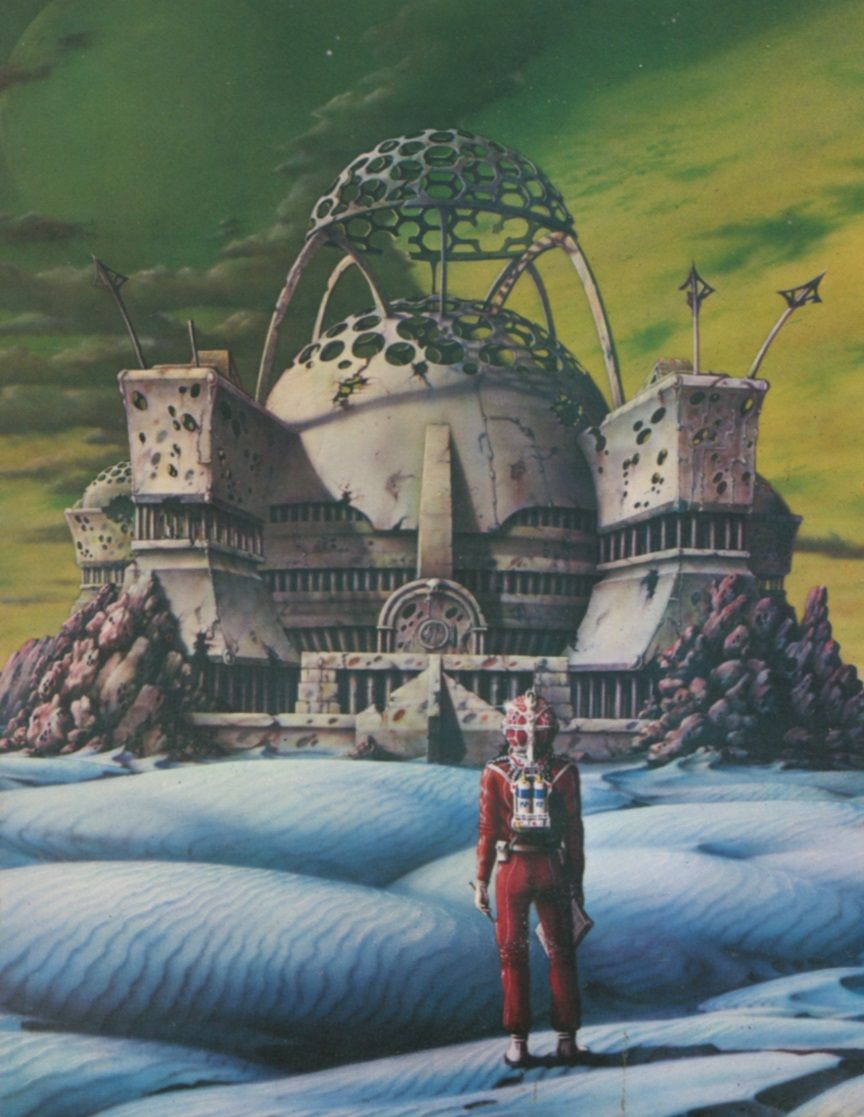
PLANETOID OF DESPOTISM

 Post-progress society

Three biomes: rocky desert, jungle, tundra.

Choose a planetoid as location. One like Ceres is good.

Planets orbit swings around wildly, with the weakened sun careening through the sky senselessly.

Seasons in chaos, asteroid rain, occasional blow-outs of transdimensional energy resulting from

AI government organized by nanobots keeps humanity from developing tools that could destroy life. Steel minds governed by invariable oath of ahimsa, their hubs spread about the world. Worshiped as wizard-gods in a number of fragmented religions and petty folklore, as the purpose of the millions of minute changes their ectoplasmic sentience effects upon the biome of the dwindling planet is beyond the rudimentary calculations of the human mind. The result of these changes is often in line with the ultimate beneficence to the remaining dregs of humanity as the terrible inhospitality of the barely terraformed micro-planet forces the AIs into an endless series of micro-corrections resembling mercurial inhumanity.


A certain allotment of food is provided from deposit cylinders and most menial labor is performed entirely by robots, nanobot liquiforms, mutants, or voluntarily by humans to have something to do

Shelterpods for living are mostly uncomfortable dumps but free

Free clothing is thermal skintight nano-webbing of various colors. Many wear it under flashier handmade clothes.

 carefully calibrated happiness-to-destruction quotient maintains karmic equilibrium to maximize free time and minimize suffering. nanobot web attempts to maintain its own neutral karma through minimum contamination and efficient use of resources


The basics are provided to all and work is unnecessary unless one chooses to do so. Some gather together in philosophical communes, or spend their lives playing complex social games. Most choose to live simple, minimalist lives tending pleasure-gardens, reading dusty tomes, developing skills, being quiet and contemplative.

A small number live as adventurers. These are the people who would be sociopaths, despots, politicians, capitalists, and generals of our world. Since nobody buys their shit they roam around fucking each other over, causing mayhem, and being chased from calm harmless villages.

An insignificant fraction dedicate them to uncovering the mysteries and histories of the planet. They live in far-flung reaches hiding from the wizard government.

Most acute wounds can be cured by healing machines, which reside in temples presided over by priests. Various geases on behalf of their philosophy are required for service. Sometimes they re-construct your body & put you into service as payment. Viral/bacterial disease infections are viewed as necessary for evolution and immune-system training is a common practice. people undertake diseases voluntarily in order to perpetuate evolution and reduce negative karma for others.

Advanced tech lies around everywhere, but the origin and understanding of it is non existent except by the wizards (AI government) or sorcerers (human scientists).

Micro-cults are everywhere, everybody believes something different. wars are fought as sport.

Humans tend to keep their population small. Childbirth is considered holy and women are respected as priestesses.

Style-guide:

How something works is never really explained, or there's a bunch of competing explanations. All this tech is seen from the eyes of an ignorant simpleton. No infodumps.

All paragraphs are 4 sentences or less.

No descriptions. Everything is in terms of verbs and adjectives.

Nothing is what it appears to be.


Weird cultures:

Sherpanthwe believe it is their goal to lead others across the lands, extremely great guides, goal is to die in an adventure

Orfichiums replace all parts of their body with live snakes

Zur-dir men beetle helmets, extremely buff, sexless, hosts for brains in jars

Haltzagog vicious little gray men with slight luck bending. Liver prized as immuno-builder, second brain prized for temporary esp and powerful hallucinations


Most animals are humans genetically modified beyond recognition to replace the desolate ecosystems.


Max Bedulenko


Saturday, March 26, 2022

Making Combat Meaningful

TLDR; I discourage players from just attacking and encourage them to say what their goal in fighting is, so combat is handled like a multi stage puzzle/trap where the various mechanisms are ever in a transient state of being revealed and dissolving.

if my battles don't feel like this i'm failing


 I don't like long drawn out conversations with NPCs. My players rarely go very deep and the times they do I'm often caught off-guard. I do my best world-building secretly, behind a curtain, pouring over old maps and working out complicated historical battles. Don't get me wrong, I enjoy my NPCs, but often I think that might be the problem. We only have so many hours to play this game and I know if I let myself go the whole session could become a conversation with one interesting dude who wears a mushroom for a hat, has a fu-man-chu mustache and rides a sapphire lizard.


The players aren't here for that, and I don't like to encourage that kind of play. If you want to have a game that goes deep into lore come smoke cigarettes with me on the porch and play 'draw the map and talk'. This game is about wresting jewels from fiends in subterranean cesspits and making damning deals with petty gods that might actually be some kind of trans-dimensional AI housed in a quivering hunk of meat.

So instead we act out the first bit of the convo, where I introduce the NPC and say what's memorable about them. Then I cut to the point and describe the gist of what's going on in omniscient narrator style. If the players do something cool or interesting I might jump back to first person and act it out, but mostly I want to get to what the game is really about.

A big way that I do this is with combat. I want to invoke a particular style with my combat. You know in old science-fantasy novels, Vance does this a lot but also in the battle at the end of Dune, when the fighting-men come in and just kill guys? They leap up with their swords and blasters and there's three options 1. die, 2. miss, 3. mortally wound. The author starts you out with fifteen fleshed out heroes and kills ten of them by the middle of the book. The heroes generally get one free miss before they are cut down.

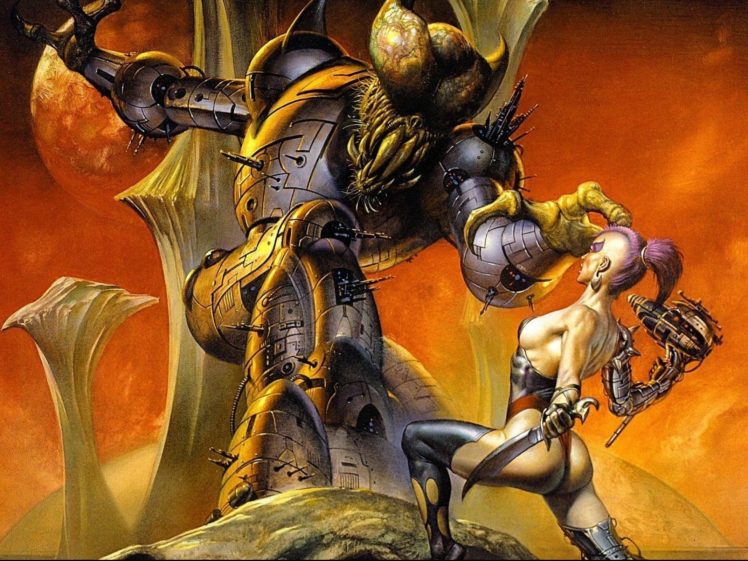
So combat is fast, hard, and gritty. I don't waste time on flowery descriptions. I ask what my players are doing and encourage them to make tactical decisions and plan amongst themselves. The monsters are smart -- they're planning too. I play them nearly as smart as I would play my very own PC. I try to gauge how smart the players are and aim just short of that. Of course, it depends on the monster. Ogres are going to hide and jump out to throw big rocks. Goblins are going to skulk, flank, shoot poisoned arrows, and flee at the first sign of trouble. Orcs blitzkrieg suddenly, creating chaos, using hit-and-run tactics, and are most likely to ambush with burning oil and use prisoners as shields. Skeletons hang back and throw stones, and if the players charge they run out of sight and wait to ambush. Zombies march tight formation and fight like a steam-roller of flailing limbs, focusing on grappling armored opponents.

Combat is deadly, monsters are smart. They look for the weak link and strike there. 

But they're also living things themselves. If they see you first they'll hide or get to higher ground. They take pot-shots from a safe distance. They build barricades or set ambushes. If it looks like they can't win in a couple rounds they beat a fighting retreat and re-group.

My player's aren't advanced. Most of them have never played D&D before. I give them lots of warnings upfront to think about the game world as being real--what would you really do. This often has the effect of making them scared. They do what they'd really do. So I usually send some hirelings along to harass and ridicule them when they're being pansies. Nothing gets the players motivated than a potential mutiny four days from civilization. Suddenly they all turn into dictators. So that's how that happens.

Combat almost never lasts more than three or four rounds because things are always moving. Each round is a pick or push "the monsters are doing this what are you going to do to stop them?"


They're moving to flank you guys, they have bows. You see more coming around the corner.

The wizard starts casting a spell. The magic-user says he thinks it's a fireball. His warriors move into phalanx position, there's no clear shot.

The troll grabs the hobbit and hoists him up into the air. He moves to shove the hobbit into his mouth where he'll start taking automatic damage if you don't stop it.

the orcs are chasing you, hurling spears. The attacks are at a -2 because of the chaos, they all miss, but it's pushing you towards the ledge--in a moment you'll be driven into a corner if you don't think fast.

The wizard launches his fireball--into the pillar, knocking it clean down. The room starts to rumble, bricks are falling from the ceiling. They'll start to fall on you guys next round if you don't figure out how to protect yourselves.

I encourage the players to push back. They talk amongst themselves and come up with a loose plan, or some of them go rogue and start acting on their own. 

I clarify with them and state repercussions: "so you guys are moving back, trying to hide behind the pillars, the fighters are trying to draw attention to themselves -- okay it works, the goblins are going for the fighters with their daggers drawn, the melee will be met next round but it's eight goblins against two, what now?"

But I give them a chance to change their decision once they start to see what might happen:

thief: "I want to run to help him"
me: "Okay so you run over to him and start lifting him up, but he's wearing platemail so he's heavy. The troll sees you and he's there in a bound, lifting his club to strike"
thief: "wait, shit i forgot--I thought I'd just be able to drag him away, I want to run to the door instead"
me: "Okay, so you wanna leave the fighter there and run away like a coward, well the troll sees him and lumbers over"
thief: "shit, sorry dude!"
fighter: "I hate you."

I warn the players when they put themselves in danger. When they come up with a plan, I tell them what might go wrong, or what the monsters will see, or what they're thinking. If they say they want to do something, and doing it won't really change anything, I just say they do it and tell them nothing changes. Or I push back.

team: "we want to try and run up and scare the ogre to see if he'll topple off the cliff"
me: "you all run up screaming, waving your swords. the ogre looks down. he smiles. you can taste his breath. he's not scared at all."
team: "we should run away."
me: "you run. he chases you. he's much faster. you can either make it to the bridge or duck off down the corridor. what now?"
thief:"let's go to the door."
fighter:"no, go across the bridge. I'll cut the ropes and try to swing across."
mage: "you're a fucking idiot"
me:"you can do it fighter, but you'll have to make a saving throw vs paralysis to see if you survive"
fighter:"fuck it, i'm doing it, i only have 1 hp anyway"
thief:"if you die i'm building a statue in town for you. if you live i'm going to shit on your chest while you're asleep"
fighter: "yeehaw! bitches! I rolled a 17!"

and I don't pull punches. We use d6s for health and hits. I roll damage and attacks in the open, where the player's know it's not me. That means you can take maybe one hit per HD. You feelin' lucky punk?

dm: "you're surrounded by bandits with crossbows. the bandit leader has the wiseman around the neck. he says 'give us the gold!'. Honestly, if you can't think a good way out of this you're probably fucked"
fighter:"I tell the bandit leader no fuck you and I try to cut his head off"
dm: "are you sure? you've got like a dozen crossbows pointed at you. you could try something else."
thief: "dude, what are you doing."
fighter: "no fuck him, he's a asshole. I stab his face."
dm: "throw your attack then"
fighter: "4 I miss"
dm: "he parries your blade easily. the bandits all fire the crossbows you knew they were pointing at your face. That's twelve attacks." *clatter* "you get hit six times for 23 damage"
fighter: "avenge me!"
mage: "fuck that we run"
thief: "can i steal his magic sword before we go?"
dm: "if you're willing to risk three of the crossbowers getting free shots at you."
thief: "nevermind."

The question is what are you willing to risk?

We don't show up to the table to throw dice. How many games have you done this?:
*clatter* a miss
*clatter* a miss
*clatter* a miss
*clatter* you hit
*clatter* one damage

Fuck that. If nothing is happening, why are we rolling? When you miss, you fail. Something changes. The attack doesn't just miss, it fails. You lose something. The enemy advances, or re-positions, or you put yourself in a bad position. Another element is added to the combat. It isn't about tracking squares on a game-board, it's about tracking an ever unfolding situation.

On the other hand if the players come out with a great plan, act confidently, make it fun, or do something interesting or unexpected, they gain the advantage. If they surprise me, the world itself it surprised. If the players fight smart I'll force the monsters to make a morale check even if there haven't been casualties. The monsters can tell when they're outmatched. They don't want to fight--they want and EASY target. The sick, small, and old antelope are the ones that get eaten. Most monsters are merely territorial. They'll fight to defend their thing, but they'd rather run away and save their own skins. This is especially true with chaotic monsters, like orcs and ogres. Lawful monsters like hobgoblins are more likely to stay on account of social conduct and expectations. Monsters are even worse than the worst parts of humanity. They're cruel and clever but stupid and mean and selfish and greedy. Selfish first, greedy second, clever third, and cruel when they have the edge.

dm: "the goblines come up, they've got their hands raised, one is waving a white flag"
thief: "i throw the camphene bomb."
fighter: "hell yeah"
cleric: "they're surrendering."
fighter: "i shoot my crossbow."
dm: "you guys are attacking?"
cleric: "this is fucked up."
mage: "I throw my dagger."
me: "okay, they totally weren't expecting this. Roll against AC 9"
*dice are resolved, most of the attacks hit*
me: "ok, you murderate the fuck out of the goblins. they're all dead. do you search the bodies?"
fighter: "yeah, i want my money back"
me: "you find they're armed with poisoned daggers. they were going to trick you and stab you in the back when they had the chance."
fighter: "an ambush!"
cleric: "good job guys."
thief: "no thanks to you."

If it all fails, let the dice fall. If they choose not to heed your warnings, they suffer the consequences. You told them the danger. You even offered alternatives. "swinging on the vine is super dangerous, the other option is to slide down the hill into the water, but that might slow you down." You were up-front and worked with them. Sometimes their plans work out. Sometimes they die horribly.

If your combats are long and drawn out, try implementing some ideas here. That's why you're a REFEREE. You're fair-ish, sort of impartial, and mostly chaotic neutral. The more you act as the eyes and ears and common sense of the players, however twisted, blind, and stupid they are, the meaner and more vicious the world can be in return. If the players have a good idea about their odds, what exactly the risk is, they can make worse decisions. Try to make every single one of those decisions count. Encourage that behavior. Because the payout is worth it.

Thursday, March 3, 2022

Gaming With Kids 2: My Kid Does the Gygax 75 Challenge

I prompted my oldest daughter to write her own dungeon. She's nine. I ran her through a game of a few sessions, and she's watched us play D&D once, but mostly just listened to me talk about it. Until this point she'd never run her own game. I suggested she draw it on graph paper, and make a key listing the contents of each room. I didn't give her any more help than that because I was curious to see what she would come up with on her own. I gave her no guidance on how to structure a dungeon, nothing on how to stock a dungeon, and no guidance on reaction checks, traps, difficulty, or anything else.

In short order she wrote two floors and ran me through it. She'd never DM'd before. I helped by knowing the rules, reminding her when to roll wandering monster checks, and offering suggestions for how to resolve certain things (eg, rolling 1-in-6 to find the right stone to open a secret door).

The rules we used were a loose primitive mash-up of old school because that's what is in my head. I scribbled out a page, front and back, for her to reference if she wanted to, but told her to use her own judgement. I've got the Moldvay stat bonus spread memorized, so I threw 3d6 straight and ended up with a 7HP  Fighter named Silverlight who wielded the long sword called Bright-Blaze, wearing chainmail and equipped with your standard grognard dungeoneering equipment.

I feel comfortable taking a picture of the first floor
since I explored most of it.

I strike up my torch and enter through the staircase at the top left. I took the east branching path and came to what is labeled room 1, which had a pool of fresh blood in the center of it (empty room!). I smelled it to see if I could discern what species the blood belonged to, it was human. She offered that it was likely the blood of another adventurer (adjudicated!). Unperturbed, I proceed to listen and tried the handles of both doors. One was locked, one was stuck. No sounds came from either, so I kicked the stuck one open only to discover both doors led to the same corridor (trick!). At the end of the corridor I heard a gruff, angry voice.

This is the exchange we had:
"Who goes there?"
"It is I, Silverlight of the Lands of Men!"
"Why do you enter our lair?"
"I come in search of treasure and glory, now who are you?"
"None of your business! Leave this place before you die!"

Not one to be threatened by a disembodied voice I drew my sword and quickly rounded the corner. I discovered a goblin in red. I asked her to describe the goblin and she said "He's 7 feet tall, purple, and covered in hair with a mean face". Impressed and more than a little intimidated, I pressed on.

"Is that a threat or a promise, foul one?"
"I will kill you!"
"Small chance! Who else lives here? Speak quickly and do not lie!"
"The goblins! This is our dungeon!"
"Fine--Then take me to your treasure, fiend!"
"No!"
"Then prepare to meet my steel!"

The goblin landed a solid hit on me, dealing 3 damage. I pressed on. After a volley of misses I finally connected with two hits and killed the beast. I searched his body, finding a ring of goblin royalty and a few gold. Pocketing the treasures continued north up along the passage to a shut door. I thrust it open and found a tiny, bare room. I assumed the western wall was a secret door, so I searched it and discovered that I had to roll a d6 until I discovered the correct stone to open it.

Once through the secret door I headed sound and kicked open the next stuck door where I was met by a bevy of horrible hissing spiders! Venom dripped from their fangs. I slammed the door shut and sprinted back to the secret door to escape only to find that I had to select the correct stone again! The spiders didn't pursue, so I produced a flaming oil bomb and torched them.

I went to explore the room they guarded, but it was full of cobwebs I couldn't cut with my sword. I employed fire again and removed them. This room had a series of smaller rooms branching off of it. In one was a beautiful garden where I met a rather rude gnome. Using my best manners I was able to befriend it, and he gave me some magical seeds.

In another room I found a caged owl. After talking for a bit I freed the owl who offered to help me find treasure if I offered to help avenge him against the goblins who captured him. He said he was a messenger from the Lion King.

In the next room I found a bed. Underneath the bed was a ring. I took it.

I kicked open the door to room 5 and found a bunch of snarling wolves ready to attack! I entered combat with them and was able to defeat all three. I searched their bodies and discovered one wore a bracelet with the symbol of the Lion King on it!

I think she had kind of written herself into a corner at this point, or all the improvising was wearing thing, because what happened with the wolves made little sense. The owl was pissed at me for killing the wolves because the wolves work with the lion king, which made them the owl's friend, but he didn't warn me of that when they attacked me. BUT they also work for the goblins, which would make them the owls enemy? Anyway, the owl chastised me before vanishing into thin air and leaving me alone in the dungeon.


There were further adventures, but I won't detail them here. I was quite surprised and pleased by how she made and ran it all in under an hour. She made lots of twisting, branching paths connected by rooms of difference sized, interspersed with secret doors. She's seen dungeons I've drawn in the past but otherwise came up with this all on her own. She had empty rooms, tricks, surprises, traps, and even some hidden treasures and battles. She adjudicated and improvised all very well. I saw her key for the rooms which were comprised of things such as:

5. wolves
6. bed (invisibilite ring)
7. gnome
8. owl

###

She hasn't worked on it much since that game. The other day when we were short on time for our language arts class (we homeschool) I told her, instead of her normal work, to write a paragraph about the area around her dungeon, naming the area around and what's special about it. Here's what she wrote:

"The ckave is a Dungeon, a vary Dangangris Dungeon. A vilig is nere The Ckave. The Ckave is srawide in foriste. In The Ckave are Vary dangangris crechrs! The foristets name is The moving foriste. The resin it is coolde that is beicas the trees tolcke, moove, and are alive!"

A great start at worldbuilding. Now all we need is a map, a wandering monster table, a description of the town, and some named NPCs!

She has a friend that wants to start playing too. Her friend can't read yet. I'm thinking about giving them a print out of the Holmes rules and seeing what comes out of it.

Wednesday, July 21, 2021

Gaming with Kids: an Introduction

 This is the first part of a series on playing tabletop roleplaying games with children. We'll cover the why's and how's, followed by specific instructions on making and running an OSR campaign for kids between the ages of 7 and 12.


Gaming with children is a unique experience for many reasons. Kids are naturally creative, their minds are unrestricted by the hard boundaries of adult rationality, and pretending imaginary worlds comes naturally to them. At the same time, as an adult, any interaction you have with a child will also be instructive. They see into you, and imitate you. It's not that they think 'I want to be like this person' and purposefully add your actions to their repertoire. It's that they naturally absorb the mannerisms and ways of being of those around them because it's how they learn.

 Children are impressionable. This is fact. They thirst to learn about the world and everything they do, from playing pretend house, to knocking over lamps, to burning an egg on the stove before you even wake up, is about learning how to be in this world. They're practicing being adults.

This is important to bear in mind when we give them media to take in. The media becomes their reality. If this media is violent, neurotic, and non-nonsensical, they will absorb this into themselves. Whatever they see is what they learn about the world, and they integrate it in a deep way that becomes the shadow-self or unconscious, that they will carry for the rest of their lives.

That is why we, as adults and caretakers, have the responsibility of screening the types of media children are allowed to consume. They don't have this ability themselves. They absorb everything they come into contact with and make it part of themselves, like sponges. If we show them a world crazed and dangerous, they come to believe, unconsciously, that the world is crazed and dangerous. If we show them a world that is gentle, and loving, and full of magic, they integrate this. Likely, through our own incompetence and oversight, they will integrate something in between.

The hope is that we give them a foundation which will raise them above the haphazard rearing we were given, so that they can carry the next generation in a better direction, and make the world better too.

It is not our jobs to teach children under the age of 12 about the dangers of the world. Children do not need to know about cruelty, irony, sarcasm, war, bitterness, and loss. These are lessons to be learned later. At a young age they are busy integrating the foundation for their psyche. They need stories that will uplift them, give them hope, give them something to model their own behavior on, and allow them to see beauty and wonder in the world.

Fairy tales, animal fables, and folklore are appropriate stories for children. They have action and adventure, but presented a way which is whole. That is to say that the verisimilitude of these self-contained stories shows a world which is self-contained, a mirror of our own, and can teach us what the world is like with the use of archetypes. These archetypes, like the hero who leaves home, the beautiful princess, the wicked step-mother, the wily fox, the ugly duckling, are fragments of the self we carry within, and when children learn these stories it helps them to unfold a part of themselves, together, with a caring adult, into thoughtful, caring adults themselves.

  Some carefully selected movies and TV shows can be appropriate in certain settings (we allow our oldest daughter to watch most Miyazaki films, and Avatar the Last Airbender, but only together with us as a family). We don't allow unrestricted, unmonitored screen time, and as a family use screens as little as we can get away with. Obviously, I'm writing this on a computer. There are simply some tasks that computers are better at. Raising your kids for you is not one of them.

Playing pretend allows children to act out the things they've witness. It gives them an opportunity to comprehend it by integrating it into their bodies. By acting out daily life in the form of pretend games, alone or with other children, they make the lessons complete and real. All pretend games children play have this instructive quality. It is their way of making sense of the world. 

Children who witness violent or confusing media without an adult present to turn to for stability frequently get stuck reliving these images, as their minds, as-of-yet unable to comprehend what they've seen, cannot integrate it. They have no basis for understanding such things, as they're still in the process of developing their worldview. Thus these confusing imagine become part of their worldview, and they spend the rest of their lives trying to understand it. Don't believe me? Go talk to anyone under the age of forty and ask what their childhood was like, and how it affected them. Go ahead, I'll wait.

On the same token, as important as it is for children to play pretend and to receive affirm, instructive stories from adults, I think it's inappropriate for adults to 'get down on their level' and play pretend games with children. Adults do not have the free imagination to do this successfully, the way children do. We are stuck in our ways, inflexible, and self-conscious, unable to truly let go and get lost in another world. Children can't help but do this. They don't need verisimilitude. They enter and live in imaginary worlds like a fish does to water.

 As adults we've already developed our inner-world, thus when we play pretend we are merely reenacting what is already integrated into us, rather than integrating something new. It is impossible for us to truly 'get down' on their level, because we are as different by nature as avocados and potatoes. We may have the same general shape, but inside and out we are not the same.

There are, however, some games which are appropriate to play with children. Adults who play pretend games with children force the children into their own adult rules-bound world. Gentle rough-hosing, peekaboo, and hide-and-seek are all games which have rules and put all players on the same footing, no matter age, ability, or cognitive preparedness. Board game, as long as they aren't the overly complicated multi-hour affair, can meet this criteria.

Likewise, I've found that Dungeons & Dragons is another type of game which can be successfully be played between adults and children. It allows the adult to enter the role of rule-holder; the Dungeon Master, who creates a sensible world governed by it's own internal logic, which is what the integrated adult mind is good at. Then, the child/children can enter as players, free to make their own choices and dream up solutions to problems, which is what young minds are good at. We can enter the game playing to each other's strengths, and imagine a world together which is creative and new, without impinging on each other's abilities. The great thing about D&D is that, unlike adults, children generally need no instruction on how to play.

When we play D&D with kids it's important that we give them scenarios that they are ready for. Overt violence, dismemberment, human sacrifice, cruelty, and the downfall of mankind are not scenarios for children. Violence can play a role if it is presented as mystical transformation, or as humans overcoming uncertainty, or as the establishment of an ordered world over a chaotic one. We don't need to reenact realistic medieval society, we need to give symbols and archetypes which can be integrated easily.

Thus D&D games based in a fairy tale-type setting are perfect. They come ready-made. We can simply drop in fairy-tale monsters, happenings, and magic and go from there.

The next post in this series will be about this.

Sunday, April 11, 2021

Small Gods

Also: D&Deities

I prefer my gods to be small, petty, morose, malignant, and self-important. They aren’t all-knowing or all-powerful, although they may pretend to be. They aren’t wise, although they are crafty. They’re more like Greco-Roman gods; they’re overly theatrical, appearing in claps of thunder, or a million writhing insects form into their body, or a burning white stag with nine arrows in it leaps over a waterfall, and with a booming voice announces their name and demands for obsequience. If they don’t get it they’re liable to throw around polymorphs or strike blindness or worse. They make henchmen quail and drop to their knees, and they like it if they can make player characters draw back in fear.

Gods are often made by mortals ascending to godhood, either via their own might, or by bathing in cosmic energies, or being raised by a their patron diety, or killing another god, or attaining enlightenment. These gods are the most self-serving type, as some small part of them remembers what it’s like to have absolutely no power, and they still derive ugly pleasure from punching down on those weaker than them. Think Buddha or Jesus, but with a chip on his shoulder.

Another type of god is created by the faith of their followers. Cultists dream up some deity, say Nartsag the Defiler. He’s a huge maggot, the size of two school buses, with a heavy-eyed human face, and he’s come to eat the dead flesh of the world and restore it to purity. Gods love purity, but they all have different ideas about what that means. This guy wants to restore the world to its primal state, a genetic soup of goo, and flies, and water. So these Cultists of Nartsag gather in town squares, collecting money, preaching, gathering in defiled ground, subjecting themselves to weird flagellation and purposefully contracting pestilences. They run sick houses in major cities where they collect all the infirm, ill, and mutated, and they treat them with ineffectual ablutions. Ostensibly, this is to help ease their suffering, but really they’re collecting the sick water in tanks in underground temples where they make an ocean of putrid filth to one day raise Nartsag from Oblivion.


How to Make a God

This is the important part: gods like this are very real to the cultists, but not to anybody else. They have to be brought into this world by rituals that player characters might have a chance to stop. Sometimes a high priest has to throw themselves into the fire at the end to grand the blood-payment to open the gate. Or they may believe that this deity is in another realm or universe, and they need help getting into this one. Either way it’s the Cult’s force of belief, their faith, that eventually coalesces into a godhead taking shape on this plane.

Gods love to be worshiped. It’s why they’re here. What did they do that’s so special, to be worthy of worship? Go ahead and ask one and find out, they’ll tell you. They’re the epitome of the cackling evil overlord, squawking on and on about their plans, about their greatness, about their triumphs, showing you all the special golden trophies they’ve been collecting since they were the squirt of a bigoted thought in a backwater sycophant’s head.

They are very powerful, but they aren’t omnipotent. They have certain powers, certain domains. They are immortal but they aren’t invincible. They can be killed, but they would never admit this, even to themselves. They might have armor that protects them from all wounds, or the ability to kill with a look, or regenerate 50 hp per round, or to teleport to the moon and live without air, but they aren’t invincible. Technically. They’re more like super-heroes. If Superman lived in my universe some idiot gong farmers would probably have started worshiping him and eventually it would have gone to his head. 


Introducing: The Lord of the Underworld!

All this makes the deities way more interesting. It gives them human foibles, makes them accessible. You can touch this thing, maybe not directly, but it’s another level of NPC above the kings and sorcerers. Also, players tend to feel a certain reverence for deities as long as you don’t surprise them with it.

I remember I had some players go and investigate a cairn I mentioned in the description for something else. I had to think up something quick, so in 30-seconds I sketched up a couple rooms, threw in a super obvious spear trap, a stupid key-and-door puzzle and some runes and skeletons and stuff.

They get through the key-and-door puzzle before I figure everything out so I start adlibbing some murals about a goddess of the earth and animals or something, there’s this god-goddess pair. They feel her presence and it’s all motherly, and she asks them to bring back her husband. Then they go and clear the spear-trap room.

I knew there had to be some big pay-off and treasure, then I remembered that part in Sailors on the Starless Sea, where the player characters sail...on a starless sea...and then there’s some big evil god they fight and everybody’s like woah holy shit we’re playing cool fantasy stuff. So I just do that, there’s a ship, and a giant squid attacks, and they end up at the bottom of an underground ocean with an alter to a god. There’s a silver bowl and a ceremonial knife, so obviously my players cut their hands and put their blood in.

I already primed them with the goddess stuff. She’s got qualities they like, earth and animals and motherly love, so they’re all down. Her husband turns out to be this bleak woeful god of war, kind of like Odin. He asks them to bring back their religion, to help them enter back into this world so they can set it to rights. The players agree. He gives them silver stuff and blessings they get to write on their character sheet (single use: negate a successful attack) and send them on their way. So now my players are totally inducted into the cult of whoever these guys are, and they’re totally on board with proclaiming these gods to the world. They bringing up the gods to NPCs every chance they get.

That’s way more fun than your player looking in some stupid book and going “I dunno, I worship the god of the sun… and beer!”  


Making Demands

So Now you have your petty god, and some powers, and you’ve introduced them to your players. But what do gods actually do? First, they’re perpetually at war with each other. They each want to re-shape the world, and they all want to be the only god. They have enemies, truces (never allies), colors, elements, favorite flowers, fashion sense, interior decorating choices, favorite board games, favorite foods, all that shit, and they hate anybody that doesn’t fawn over their taste. Including other gods. They’re jealous, vindictive, small-minded and incredibly fucking strong. Imagine a bunch of catty drunk girls at a bar, but they can all fly, have skin made from steel, can lift a truck, and secrete mind-control pheromones. Also they can grant wishes.

That brings me to my next point: Gods love to dangle carrots in your face if you do their dirty work. Gods want to do the least they can possibly get away with, while taking all the credit and all the power. Kind of like the CEO of a big evil company, but with heat vision. Their self-improvement program is a huge pyramid scheme, where the more followers you induct the higher in the power-ladder you get to grow. You dump money and time and energy into it and they dish out magic weapons, and spell powers, and give you extra henchmen when you please them. If you fail them they rip it all away and leave you hanging, just to remind you who’s in charge. Your magic sword turns into a dove, your healing spell summons a bunch of locusts, your hands turn into wheels. And your patron diety just laughs and laughs until you apologize and make a big show of sacrificing bulls/maidens/jewelry at their nearest shrine.

Thus you need to have the gods interacting with the world somehow. Gods are lazy, they don’t show up in person unless they have to. Instead, they prefer to send stand-ins or omens, the vaguer the better. Thus, shrines and temples and priests. Need some sage advice? Go to Pithion Lord of the Dark Water’s temple, burn some incense, toss a few coins in the slot, and the high-priestess does a little dance and dispenses wisdom. What does this have to do with Pithion? Who cares? Now we know where to go to get the Crystal of Blhabla.

Need a different thing? You gotta do a quest, just like any other NPC. If you want this thing I have, you gotta do a thing. Also you have to dedicate your eternal soul to my whims or I’LL GET ANGRY.

Get healing, get quests, get spells. Players love this stuff. Last but not least: Clerics.


Meet my old class: Pilgrims

My favorite class in Morrowind is the Pilgrim. It’s a stealth-based class, specializing in speechcraft and healing, with minors in illusion magic and alchemy. The idea is these free-booters traipse about, talking their way in to trouble, and when they get there they use magic and running the fuck away to get out of it.

It makes me think of pilgrimages in Medieval Europe. Basically, making pilgrimages was a big deal, everybody was doing it for all kinds of reasons. Healing, fertility, boredom, for showing off to your friends how devote you are. Humans haven’t changed at all in ten-thousand years. A whole class of lazy asshole grew up around making pilgrimages, where these guys would wander around, avoiding work, going from holy site to holy site, collecting all the badges, and along the way they would hawk fake holy relics to idiots, shmooze their ways into monasteries so they could drink up all the beer and drool on the tabernacle, dawdle up to peasant farmers and demand room and board on account of their holy rigor, eat all the food then sleep until 11:15, then go off to the next place, all that jazz.

That’s what I want my clerics to be! No more being some ‘holy warrior’ for the church but oh yeah sorry, we can’t afford anything so go meet up with some cut-throats and hedge-wizards and figure it out yeah? Mitra will be pleased. Traditional clerics make no fucking sense outside of the original Blackmoor campaign.

We live in a world with dozens of gods, covering dozens of different realms of power, from oceans, to rot, to love, and animal-husbandry, etc, and they all grant the same twenty spells? They all give their followers power to rebuke undead? They all send their holymen on crusades to…. Go beat up goblins and take their stuff?

Instead, what I want is a conman or a ne’er-do-well who’s going off on adventures for personal gain and, yeh, if they can pitch some coin Patron Deity’s way, or beat up some Holy Foes great.

So let’s do it like this.

Everything's the same as Cleric except:

They can use their deity’s favorite weapon, which they carry as a symbol of their faith, and also the same kinds magic-users use. Optionally, just let them use all weapons because fuck it.

Instead of Rebuke Undead they can cast Protection from Evil as a spell-like ability, whereas “evil” is whoever is trying to kill the pilgrim, or is the enemy of the god they’re calling upon for help. The god gets to decide whether this is an appropriate use of their name. If they demand it too many time maybe it fizzles out, or the god doesn’t hear them, or afterwards the god demands some quest or penitence for bugging them too much.

At first level it’s only a couple feet wide, centered on the Cleric, let’s say enough room for one other person if they’re hugging onto the Cleric. The way I think of this spell is that it kind of pushes back monsters and they have to work really hard to step into the light and try to hit the caster. It’s kind of the like old way Rebuke Undead was adjudicated. At fourth level if becomes 10’ wide, they can block up a whole corridor with it.

 Undead are supposed to be horrible, unstoppable monstrocities. Isn't lame if the cleric can just roll dice to see if he can scare them away? And then, when it doesn't work? 

"I try to turn the zombies" *clatter*
"Oh sorry, St. James is helping a kitten right now call back later"

Alternatively make them spend 10 minutes transcribing a sigil of power from the god on the floor, with chalk or salt or silver dust. It lasts for an hour and keeps out all bad stuff, but you can't move it.

As for their spells, they don’t just automatically get all those spells/miracles/prayers. They have to travel to holy sites and preform duties for their patron to be granted those spells as spell-like abilities, just like how a Magic-User has to search for their spells, be taught them, or gain them from spellbooks. They can have as many as their normal spell list, which they transcribe all those spells into a prayerbook (see where I’m going with this?)

Additionally, they get spells from this pilgrimages from their deity which are within the realm of the deity to grant. So Gods of Shadows and Sneaking grant Invisibility and Darkness, Gods of Fire grant Burning Hands, Light, only Gods of Healing Grant Healing. Maybe Gods that have particular foes, like Undead, or Devils, or Unicorns can grant turning against those foes.

Maybe a Pilgrim can have like two or three favorite deities, as long as they don’t clash with each other. Gods are selfish and petty but also they’re kind of dumb and I dunno. It’s probably fine. Or whatever. Dance monkey, dance!

 What does this fix? It makes the Cleric more dependent on deity interaction. It takes out the stupid Judeo-Christian stuff. It gives more variety in spells, and differentiates between clerics (they haven't all been personally granted specific spells). It puts the cleric reason for adventuring in-line with the other adventurers, while still giving him excuse for building a temple.