Also: D&Deities
I prefer my gods to
be small, petty, morose, malignant, and self-important. They aren’t
all-knowing or all-powerful, although they may pretend to be. They
aren’t wise, although they are crafty. They’re more like
Greco-Roman gods; they’re overly theatrical, appearing in claps of
thunder, or a million writhing insects form into their body, or a
burning white stag with nine arrows in it leaps over a waterfall, and
with a booming voice announces their name and demands for
obsequience. If they don’t get it they’re liable to throw around
polymorphs or strike blindness or worse. They make henchmen quail and
drop to their knees, and they like it if they can make player
characters draw back in fear.
Gods are often made
by mortals ascending to godhood, either via their own might, or by
bathing in cosmic energies, or being raised by a their patron diety,
or killing another god, or attaining enlightenment. These gods are
the most self-serving type, as some small part of them remembers what
it’s like to have absolutely no power, and they still derive ugly
pleasure from punching down on those weaker than them. Think Buddha
or Jesus, but with a chip on his shoulder.
Another type of god
is created by the faith of their followers. Cultists dream up some
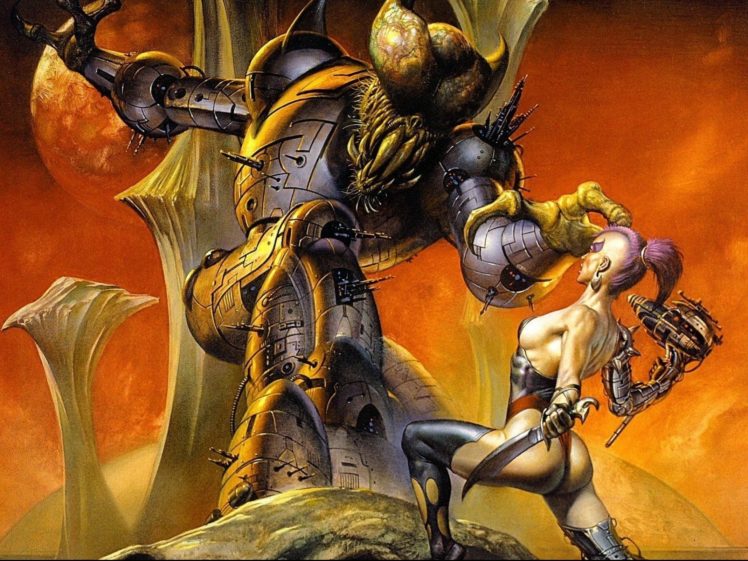
deity, say Nartsag the Defiler. He’s a huge maggot, the size of two
school buses, with a heavy-eyed human face, and he’s come to eat
the dead flesh of the world and restore it to purity. Gods love
purity, but they all have different ideas about what that means. This
guy wants to restore the world to its primal state, a genetic soup of
goo, and flies, and water. So these Cultists of Nartsag gather in
town squares, collecting money, preaching, gathering in defiled
ground, subjecting themselves to weird flagellation and purposefully
contracting pestilences. They run sick houses in major cities where
they collect all the infirm, ill, and mutated, and they treat them
with ineffectual ablutions. Ostensibly, this is to help ease their
suffering, but really they’re collecting the sick water in tanks in
underground temples where they make an ocean of putrid filth to one
day raise Nartsag from Oblivion.
How to Make a God
This is the
important part: gods like this are very real to the cultists, but not
to anybody else. They have to be brought into this world by rituals
that player characters might have a chance to stop. Sometimes a high
priest has to throw themselves into the fire at the end to grand the
blood-payment to open the gate. Or they may believe that this deity
is in another realm or universe, and they need help getting into this
one. Either way it’s the Cult’s force of belief, their faith,
that eventually coalesces into a godhead taking shape on this plane.
Gods love to be
worshiped. It’s why they’re here. What did they do that’s so
special, to be worthy of worship? Go ahead and ask one and find out,
they’ll tell you. They’re the epitome of the cackling evil
overlord, squawking on and on about their plans, about their
greatness, about their triumphs, showing you all the special golden
trophies they’ve been collecting since they were the squirt of a
bigoted thought in a backwater sycophant’s head.
They are very
powerful, but they aren’t omnipotent. They have certain powers,
certain domains. They are immortal but they aren’t invincible. They
can be killed, but they would never admit this, even to themselves.
They might have armor that protects them from all wounds, or the
ability to kill with a look, or regenerate 50 hp per round, or to
teleport to the moon and live without air, but they aren’t
invincible. Technically.
They’re more like super-heroes. If Superman lived in my universe
some idiot gong farmers would probably have started worshiping him
and eventually it would have gone to his head.
Introducing:
The Lord of the Underworld!
All
this makes the deities way more interesting. It gives them human
foibles, makes them accessible. You can touch this thing, maybe not
directly, but it’s another level of NPC above the kings and
sorcerers. Also, players tend to feel a certain reverence for deities
as long as you don’t surprise them with it.
I
remember I had some players go and investigate a cairn I
mentioned in the description for something else.
I had to think up something quick, so in 30-seconds I sketched up a
couple rooms, threw in a super obvious spear trap, a stupid
key-and-door puzzle and some runes and skeletons
and stuff.
They
get through the key-and-door puzzle before I figure everything out so
I start adlibbing some murals about a goddess of the earth and
animals or something, there’s this god-goddess pair. They feel her
presence and it’s all motherly, and she asks them to bring back her
husband. Then they go and clear the spear-trap room.
I
knew there had to be some big
pay-off and treasure, then I
remembered that part in Sailors on the Starless
Sea, where the player characters sail...on a starless sea...and then
there’s some big evil god
they fight and everybody’s like woah holy shit we’re playing cool
fantasy stuff. So I just do
that, there’s a ship, and a giant squid attacks, and they end up at
the bottom of an underground ocean with an alter to a god. There’s
a silver bowl and a ceremonial knife, so obviously my players cut
their hands and put their blood in.
I
already primed them with the goddess stuff. She’s got qualities
they like, earth and animals and motherly love, so they’re all
down. Her husband turns out to be this bleak woeful god of war, kind
of like Odin. He asks them to bring back their religion, to help them
enter back into this world so they can set it to rights. The players
agree. He gives them silver stuff and blessings they get to write on
their character sheet (single use: negate a successful attack) and
send them on their way. So now my players are totally inducted into
the cult of whoever these guys are, and they’re totally on board
with proclaiming these gods to the world. They bringing up the gods
to NPCs every chance they get.
That’s
way more fun than your player looking in some stupid book and going
“I dunno, I worship the god of the sun… and beer!”
Making
Demands
So
Now you have your petty god, and some powers, and you’ve introduced
them to your players. But what do gods actually do? First, they’re
perpetually at war with each other. They each want to re-shape the
world, and they all want to be the only god. They have enemies,
truces (never allies), colors, elements, favorite flowers, fashion
sense, interior decorating choices, favorite board games, favorite
foods, all that shit, and they hate anybody that doesn’t fawn over
their taste. Including other gods. They’re jealous, vindictive,
small-minded and incredibly fucking strong. Imagine a bunch of catty
drunk girls at a bar, but they can all fly, have skin made from
steel, can lift a truck, and secrete mind-control pheromones.
Also they can grant wishes.
That
brings me to my next point: Gods love to dangle carrots in your face
if you do their dirty work. Gods want to do the least they can
possibly get away with, while taking all the credit and all the
power. Kind of like the CEO of a big evil company, but with heat
vision. Their self-improvement program is a huge pyramid scheme,
where the more followers you induct the higher in the power-ladder
you get to grow. You dump money and time and energy into it and they
dish out magic weapons, and spell powers, and give you extra henchmen
when you please them. If you fail them they rip it all away and leave
you hanging, just to remind you who’s in charge. Your magic sword
turns into a dove, your healing spell summons a bunch of locusts,
your hands turn into wheels. And your patron diety just laughs and
laughs until you apologize and make a big show of sacrificing
bulls/maidens/jewelry at their nearest shrine.
Thus
you need to have the gods interacting with the world somehow. Gods
are lazy, they don’t show up in person unless they have to.
Instead, they prefer to send stand-ins or omens, the vaguer the
better. Thus, shrines and temples and priests. Need some sage advice?
Go to Pithion Lord of the Dark Water’s temple, burn some incense,
toss a few coins in the slot, and the high-priestess does a little
dance and dispenses wisdom. What does this have to do with Pithion?
Who cares? Now we know where to go to get the Crystal of Blhabla.
Need
a different thing? You gotta do a quest, just like any other NPC. If
you want this thing I have, you gotta do a thing. Also you have to
dedicate your eternal soul to my whims or I’LL GET ANGRY.
Get
healing, get quests, get spells. Players
love this stuff. Last but not
least: Clerics.
Meet
my old class: Pilgrims
My
favorite class in Morrowind is the Pilgrim.
It’s a stealth-based class, specializing in speechcraft and
healing, with minors in illusion magic and alchemy. The
idea is these free-booters traipse about, talking their way in to
trouble, and when they get there they use magic and running the fuck
away to get out of it.
It
makes me think of pilgrimages in Medieval Europe. Basically, making
pilgrimages was a big deal, everybody was doing it for all kinds of
reasons. Healing, fertility, boredom, for showing off to your friends
how devote you are. Humans
haven’t changed at all in ten-thousand years. A
whole class of lazy asshole grew up around making pilgrimages, where
these guys would wander around, avoiding
work, going from holy site to
holy site, collecting all the badges, and along the way they would
hawk fake holy relics to idiots, shmooze their ways into monasteries
so they could drink up all the beer and drool on the tabernacle,
dawdle up to peasant farmers and demand room and board on account of
their holy rigor, eat all the food then sleep until 11:15, then go
off to the next place, all that jazz.
That’s
what I want my clerics to be! No more being some ‘holy warrior’
for the church but oh yeah sorry, we can’t afford anything so go
meet up with some cut-throats and hedge-wizards and figure it out
yeah? Mitra will be pleased. Traditional clerics make no fucking
sense outside of the original Blackmoor campaign.
We
live in a world with dozens of gods, covering dozens of different
realms of power, from oceans, to rot, to love, and animal-husbandry,
etc, and they all grant the same twenty spells? They all give their
followers power to rebuke undead? They all send their holymen on
crusades to…. Go beat up goblins and take their stuff?
Instead,
what I want is a conman or a ne’er-do-well who’s going off on
adventures for personal gain and, yeh, if they can pitch some coin
Patron Deity’s way, or beat up some Holy Foes great.
So
let’s do it like this.
Everything's the same as Cleric except:
They
can use their deity’s favorite weapon, which they carry as a symbol
of their faith, and also the same kinds magic-users use. Optionally,
just let them use all weapons because fuck it.
Instead
of Rebuke Undead they can cast Protection from Evil as a spell-like
ability, whereas “evil” is whoever is trying to kill the pilgrim,
or is the enemy of the god they’re calling upon for help. The god
gets to decide whether this is an appropriate use of their name. If
they demand it too many time maybe it fizzles out, or the god doesn’t
hear them, or afterwards the god demands some quest or penitence for
bugging them too much.
At
first level it’s only a couple feet wide, centered on the Cleric,
let’s say enough room for one other person if they’re hugging
onto the Cleric. The way I think of this spell is that it kind of pushes back monsters and they have to work really hard to step into the light and try to hit the caster. It’s kind of the like old way Rebuke Undead was adjudicated. At fourth level if becomes 10’ wide, they
can block up a whole corridor with it.
Undead are supposed to be horrible, unstoppable monstrocities. Isn't lame if the cleric can just roll dice to see if he can scare them away? And then, when it doesn't work?
"I try to turn the zombies" *clatter*
"Oh sorry, St. James is helping a kitten right now call back later"
Alternatively make them spend 10 minutes transcribing a sigil of power from the god on the floor, with chalk or salt or silver dust. It lasts for an hour and keeps out all bad stuff, but you can't move it.
As
for their spells, they don’t just automatically get all those
spells/miracles/prayers. They have to travel to holy sites and
preform duties for their patron to be granted those spells as
spell-like abilities, just like how a Magic-User has to search for
their spells, be taught them, or gain them from spellbooks. They can
have as many as their normal spell list, which they transcribe all
those spells into a prayerbook (see where I’m going with this?)
Additionally,
they get spells from this pilgrimages from their deity which are
within the realm of the deity to grant. So Gods of Shadows and
Sneaking grant Invisibility and Darkness, Gods of Fire grant Burning
Hands, Light, only Gods of Healing Grant Healing. Maybe Gods that
have particular foes, like Undead, or Devils, or Unicorns can grant
turning against those foes.
Maybe
a Pilgrim can have like two or three favorite deities, as long as
they don’t clash with each other. Gods are selfish and petty but
also they’re kind of dumb and I dunno. It’s probably fine. Or
whatever. Dance monkey, dance!
What does this fix? It makes the Cleric more dependent on deity interaction. It takes out the stupid Judeo-Christian stuff. It gives more variety in spells, and differentiates between clerics (they haven't all been personally granted specific spells). It puts the cleric reason for adventuring in-line with the other adventurers, while still giving him excuse for building a temple.


 '